
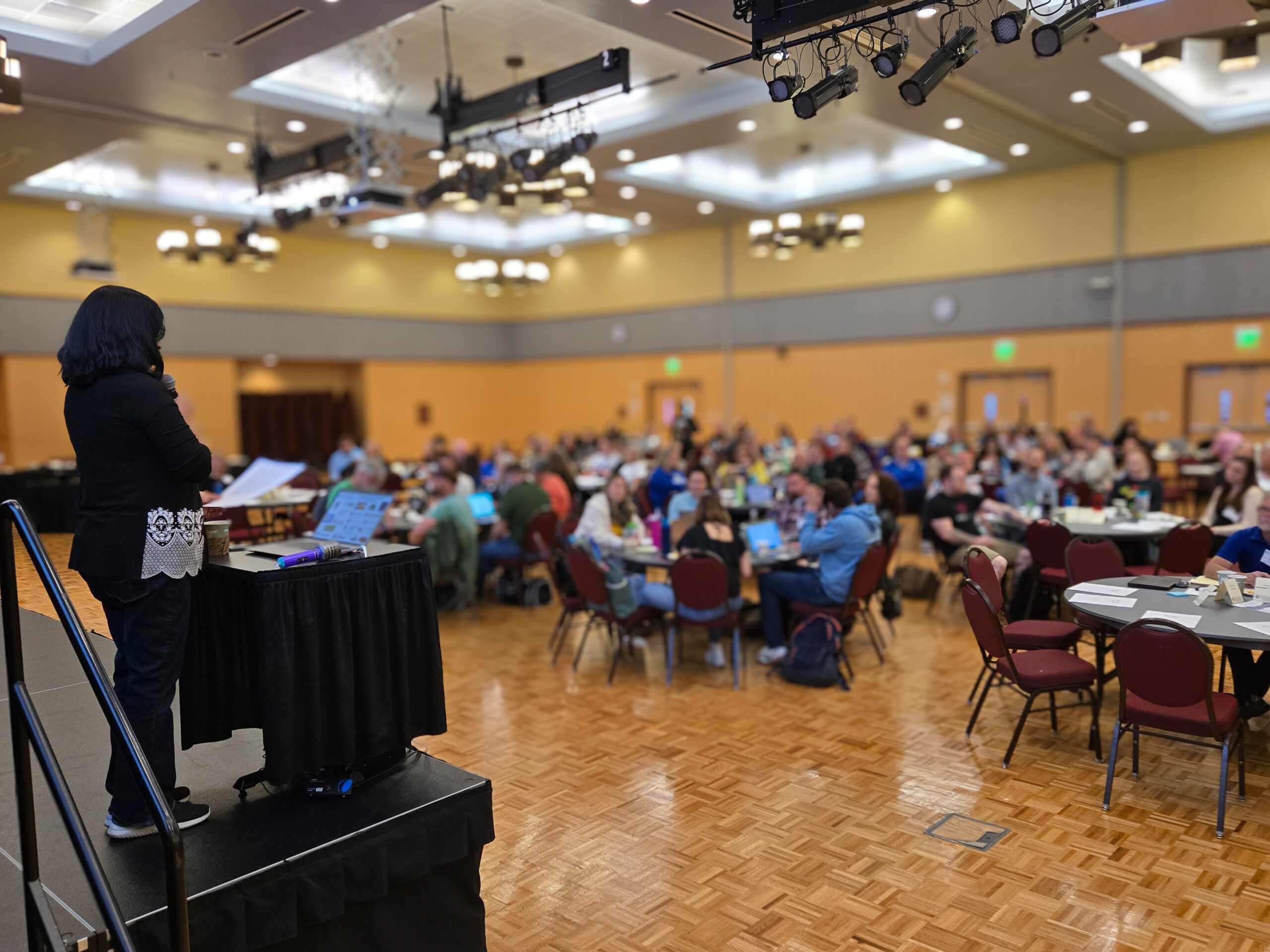
On May 6, more than 40 schools in Washington came together for a spring gathering that felt both like a celebration and an energizer for Washington State’s Mastery Based Learning Collaborative (MBLC). The MBLC is funded and supported by Washington’s State Board of Education (SBE) and coached by Great Schools Partnership (GSP) throughout the state of Washington.
The MBLC network of 45 Washington schools is working toward implementing high-quality mastery-based learning and culturally responsive-sustaining education practices that ensure every student succeeds and feels safe at school. The spring gathering was an opportunity to bring the 45 schools and districts of the first two MBLC Cohorts together, to share their successes, and look to the future of this innovative project.
Mastery-Based Learning Collaborative Cohorts
Educators from across the Mastery Based Learning Collaborative Cohort 1 and Cohort 2 schools gathered in Ellensburg, Washington (the historic home of the K’ti’tas and Pshwánapam), some reuniting with familiar faces, others meeting for the first time. What unfolded was a powerful day of connection, learning, and reflection — grounded in a shared commitment to reimagining learning at our schools.
For MBLC’s Cohort 1 schools, the gathering carried a particular sense of reflection. As they neared the end of their formal involvement in the collaborative, many took the opportunity to reflect on the growth, challenges, and transformation they’ve experienced over the past few years. Time and again, we heard expressions of deep appreciation for the relationships built and the work accomplished through the Mastery Based Learning Collaborative — and just as often, we heard a desire to stay engaged and continue contributing to the evolving vision of this community. The end of their cohort phase, for many, felt less like a closing chapter and more like a shift into a new role within the larger movement.
At the same time, Cohort 2 schools brought lots of new experience to collaborate around. Educators leaned into workshops, asked thoughtful questions, and began mapping out the changes they want to lead in the year ahead. The sense of purpose was strong — this is a group ready to take big steps, supported by the experiences and encouragement from those who came before them.
Student Voices
A highlight of the day was hearing directly from students, whose voices reminded us why this work matters. These students had been meeting regularly all year to act as an advising and steering committee for the Mastery Based Learning Collaborative efforts. Their insights were honest, affirming, and often moving — evidence of the impact this collaborative is already having in classrooms and communities.
Educators in the room heard from students their interest in engaging and personalized learning experiences, and the want of patient and caring adults. At the end of the session, in the reverse from the norm, the students asked questions of the educators in the room. One MBLC educator said “I took two pages of notes on student comments! I cannot wait to share this with our administration.”
Learning and Leading Together
Throughout the day, we deepened our knowledge through workshops that stretched our thinking and built our collective capacity. From Multi-Tiered Systems of Support to instructional practices from Building Thinking Classrooms by Dr. Peter Liljedahl, each session added new tools — and new inspiration — to our practice.
Many educators walked away with appreciation for the practical tips and tools that they gained from their session. In particular, one educator from the Building Thinking Classrooms session said, “So many easy to implement practices that I can use immediately. I love practical PD like this.”
One of the sessions extended the assessment learning from the year before. A group of MBLC educators that designed and implemented assessments at last year’s spring gathering came back this year with student work and engaged in a scoring protocol to calibrate the assessment with the rubric. This was a powerful process to bring the assessment work full circle. “Calibration is SO helpful for building authentic projects and ensuring continuity between teachers/classrooms” said one collaborative member.
Mastery-Based Learning Collaborative Impact Fellows
GSP coaches were also inspired by the presentations from the Mastery Based Learning Collaborative Impact Fellows, who shared the results of their powerful, practitioner-led projects. The Impact Fellows are a group of educators from MBLC schools who were selected in September, 2024 as leaders within the MBLC. Their presentations showed us what happens when educators are empowered to lead meaningful change, and they left many of us thinking, “what could this look like in my own context?” With year-long support alongside studying the book “Street Data” by Shane Safir and Jamila Dugan, the Impact Fellows thought deeply about impact and the many ways it’s measured.
The four main presentations centered around assessment design, rubrics within a classroom, shared outcomes across a school, and community, student, and family voice. Fellows individually made an impact in their school context, ranging from leading PD for fellow staff members to creating toolkits to engaging family and community for input around MBLC. In one project, the teacher fellow used chocolate chip cookies to engage students in the process of rubric design. Students reported a better understanding of the value of rubrics and helped co-create another rubric for developing and using models in science.
Another fellow spent the year honing and fine-tuning the language for each of their Portrait of a Graduate traits. These led and will lead to further alignment across the school to measure learning outcomes. One other project collected feedback and input from family and community members on their knowledge of MBLC and what the shifts mean for their students. Lastly, one fellow even created a website guidebook to pass along that includes all of their work on future ready skills, MBLC systems, and Culturally Responsive and Sustaining Education support — this will lead to long-term sustainability!
Mastery-Based Learning Collaborative and Beyond
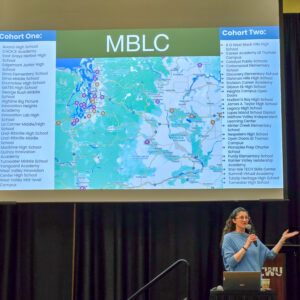
As we look ahead, the spirit of the spring gathering lingers. MBLC Cohort shared lessons that will continue to shape our path forward. MBLC Cohort 2 is energized, fueled by new ideas and the support of a growing community. And all of us — students, educators, and partners alike — are part of something bigger than any one school or initiative.
We left the gathering not only with new strategies and plans, but also with a continued sense of purpose. The work continues — and so does our commitment to doing it, together.
If you’re interested in exploring what a Mastery Based Learning Collaborative could look like for your state or district, we encourage you to start a conversation with our Director of School Partnerships, José Bou!

GSP Senior Associate
About the Author
Melanie Shivraj is a senior associate with the Great Schools Partnership. Melanie is a seasoned educator with over nine years of dedicated classroom experience, focusing on teaching high school biology. Throughout her career, she has held various leadership roles that underscore her commitment to excellence in education and equity. Melanie has served as a department chair, a grade-level leader, a DEI (Diversity, Equity, and Inclusion) chair, and a restorative practices coordinator. Melanie has an undergraduate degree in Biology from the University of North Carolina at Chapel Hill and a Master’s in Secondary Education from Long Island University, Brooklyn.