How Committed is Your School to Equity? A Whole-School Collaborative Assessment and Readiness Tool

What does a school committed to equity look like? How can you help your school community develop understanding of research on effective school practices? What are practical, specific strategies to use to improve student learning? In this session, participants will actively engage with the second edition of Global Best Practices, the New England Secondary School Consortium’s self-assessment tool, to address these questions. Participants will leave with concrete strategies for leading whole-school assessment and action planning, as well as additional tools and resources to dig deeper into equity issues in schools.

Presenters

Craig Kesselheim, senior associate | Great Schools Partnership

Ken Templeton, senior associate | Great Schools Partnership

Andi Summers, senior associate | Great Schools Partnership

Materials

click to download​​
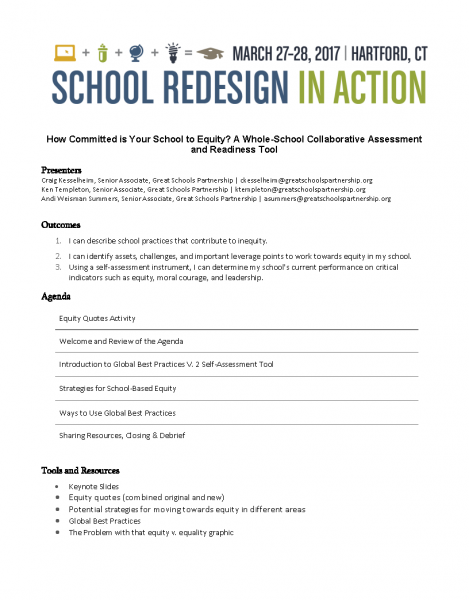
A flyer for “School Redesign in Action,” hosted by the Great Schools Partnership on March 27-28, 2017, in Hartford, CT. It details a session on assessing schools’ equity, featuring presenters, objectives, agenda, and related tools and resources.
Agenda
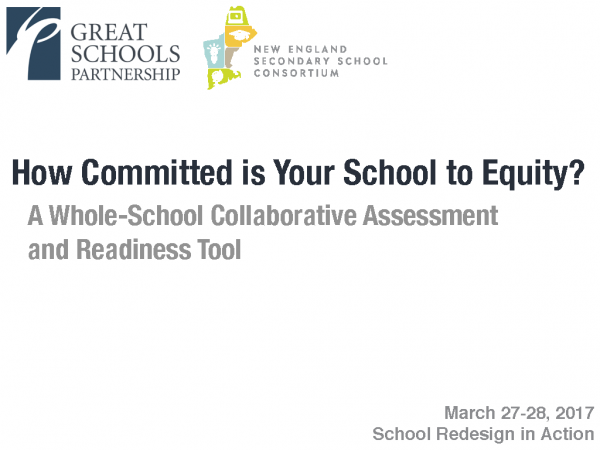
A presentation slide featuring the Great Schools Partnership and New England Secondary School Consortium logos. Titled, "How Committed is Your School to Equity? A Whole-School Collaborative Assessment and Readiness Tool." Event date: March 27-28, 2017.
Presentation Slides
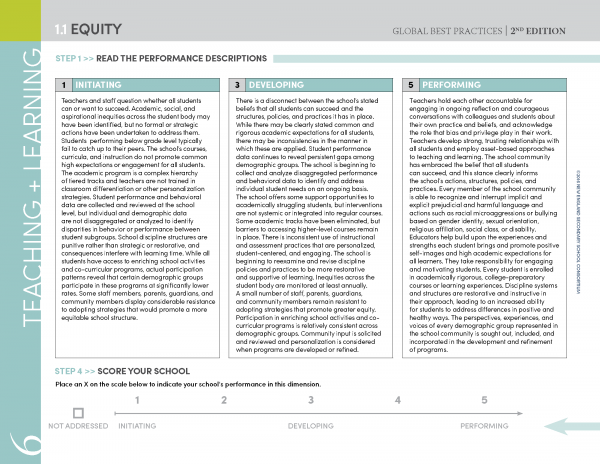
A chart titled Read the Performance Descriptions, developed by Great Schools Partnership, shows five columns: Not Addressed, Initiating, Developing, Performing, and a scoring area for school teaching and learning performance. Text explains each level.
Page from Global Best Practices 1.1 Equity
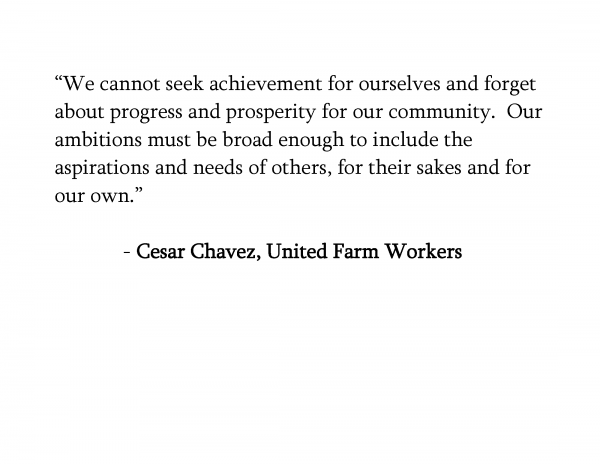
Quote by Cesar Chavez, United Farm Workers: We cannot seek achievement for ourselves and forget about progress and prosperity for our community. As the Great Schools Partnership reminds us, our ambitions must also include the aspirations and needs of others.
Equity Quotes
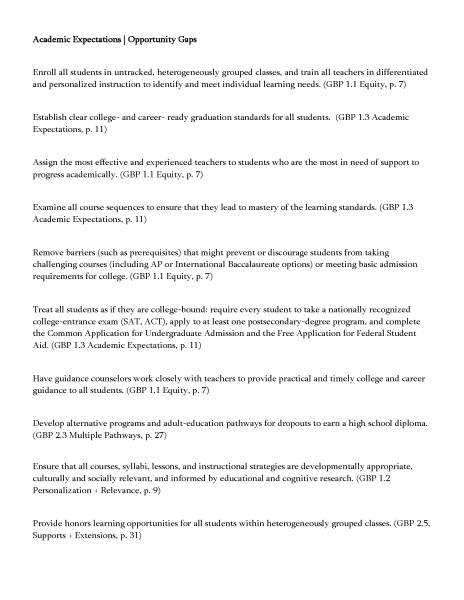
A document from the Great Schools Partnership lists academic expectation policies, such as enrolling all students in heterogeneous classes, providing differentiated instruction, offering advanced coursework to all, removing barriers, and supporting college and career readiness.
Equity Strategies
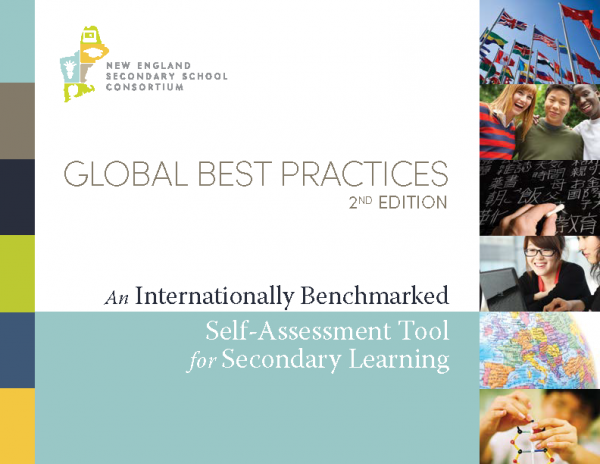
Cover of the Global Best Practices 2nd Edition self-assessment tool by the New England Secondary School Consortium and Great Schools Partnership, featuring diverse students, international flags, and educational themes.
Global Best Practices
Two side-by-side illustrations, inspired by Great Schools Partnership, compare equality and equity. The equality side shows three people of different heights on equal boxes, while the equity side adjusts box heights so each person can see the baseball game.
Cultural Organizing article
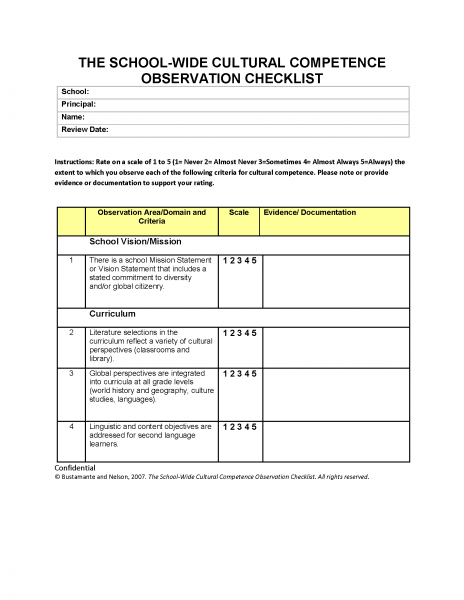
A cultural competence observation checklist for schools, inspired by Great Schools Partnership, listing criteria in areas like School Vision/Mission, Curriculum, and Language, with rating scales from 1 to 5 for each criterion.
The Schoolwide Cultural Competence Observation Checklist
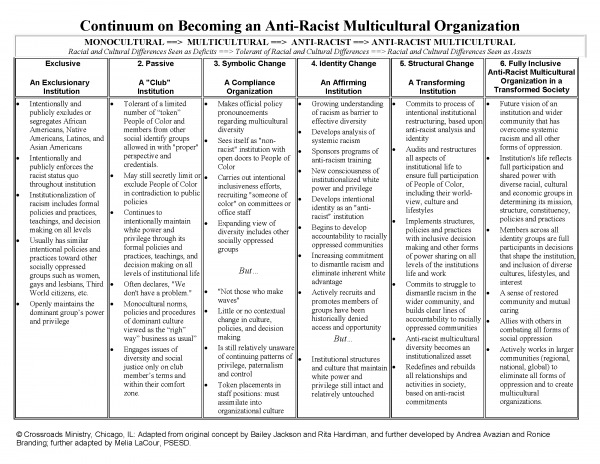
A chart titled Continuum on Becoming an Anti-Racist Multicultural Organization, developed by the Great Schools Partnership, shows six stages from Exclusive/Monocultural to Fully Inclusive/Anti-Racist Multicultural, with each stage detailed in labeled columns.
Continuum on Becoming an Anti-Racist Multicultural Organization