
I was teaching 11th-grade biology when COVID-19 hit. The world paused, then pivoted to react to our new reality. Remote and hybrid learning forced us to review and revise many of our school policies—attendance, grading, family communication, and more. For the first time in my teaching career, I was part of conversations with my colleagues and decision-makers to help determine how best to represent student learning in ways that were newly equitable, flexible, and accessible.
From that moment on, school policies and my day-to-day classroom decisions were analyzed through a lens of cultural relevance, social-emotional learning, and trauma-informed practices. Since then, education leaders have been seeking out opportunities to use these lenses to create and adopt policies that serve all students. How can leaders collaboratively deepen our shared understanding of equitable and responsive learning communities and explore strategies to combat the pushback that gets in the way of change?
Communities of Practice as Catalysts for Change
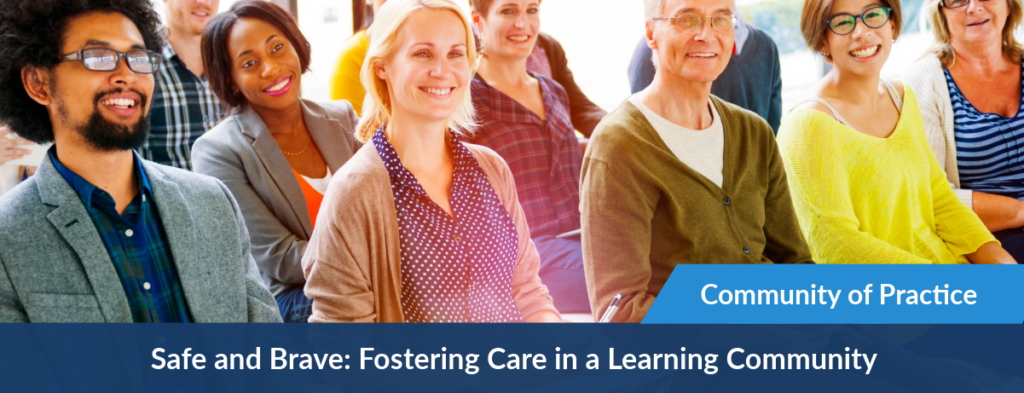
A community of practice is a group of people who have a shared concern or passion and convene to share ideas, pose questions, explore new possibilities, create knowledge, administer consultancies, and move to action. I recently asked Emily Gilmore, a senior associate here at the Great Schools Partnership, why she helped design a community of practice focused on safe and brave learning communities that can help support educators in making decisions using culturally-responsive, trauma-informed, and social-emotional lenses.
Here’s what she had to say: “To be in a community of practice is to be in a learning space. It’s a space where you can ask questions and be critical of one another in a way that is building our knowledge and understanding before we make decisions that ultimately impact our students who have the least amount of say.”
In participating in this community of practice, educators will gain invaluable insights and tools on how best to utilize these important lenses in all the work they do: designing open houses, updating grading policies, revisiting community partnership procedures, and so much more. Educators will walk away not only with tangible learnings such as protocols for developing working agreements, setting intentions, and facilitation; they will also have the opportunity to give each other feedback before policies go into place.
“I’ve been a part of communities of practice that have radically shifted the way that I think about my own work, and also how to just be in community with others,” said Emily Gilmore. “I think it’s a really powerful opportunity to do some shared learning.”
Opportunities for a Wide Variety of Participants
You may be thinking your role isn’t right for this community of practice. Maybe you’re not in a decision-making position. But in speaking with educators doing this work, I’ve learned that almost any role can benefit from the type of collaboration enabled by this community of practice.
Emily Gilmore said, “I would say the most valuable communities of practice that I’ve been in comprised people who didn’t share professional responsibilities. The greatest insights often result from collaboration between people who see the world through different lenses.” In other words: When a community of practice includes a diverse range of educators representing a wide variety of roles, there’s more opportunity for equitable and responsive decision-making.
Big or small, new or old, schools and districts are perpetually changing, making them all perfect candidates for this work. Your school may be looking to move forward with a multitude of lessons learned during the pandemic. Are your graduation pathways asset-based and inclusive of all learners and post-secondary plans? Is your attendance policy trauma-informed and equitable for student circumstances? Does your grading policy accurately portray the whole child in all of their learning and strengths? Are your family engagement strategies inclusive of and accessible to all student cultures? Wherever you are in the journey toward equitable education, Safe and Brave: Fostering Care in Learning Communities can help provide the support you need to foster lasting change.
A Final Thought
Students have always been at the center of my day-to-day decision-making. Every moment of every day is filled with large and small decisions that can have a spectrum of impact on student outcomes. Participating in this type of deep learning can fundamentally change how we approach those decisions—decisions that can make a real difference.
Taking advantage of the learning and experiences during the pandemic and our collective expertise is an excellent way to push forward policy that better serves students in an equitable, culturally relevant, and trauma-informed way.
Learn more about or register for Safe and Brave: Fostering Care in a Learning Community.