
DEW Collaborative: Current Regional Diversity Efforts
The landscape mapping process identified 140 programs, initiatives, partnerships, and organizations actively committed to diversifying the educator workforce in New England. Even with a narrowly focused set of search parameters described previously, the mapping process demonstrated growing momentum for efforts at multiple levels—from the state level to individual schools and communities—and across the five areas of the DEW framework to increase the diversity of the educator workforce. The landscape mapping process also revealed substantial variation across the region in terms of the:
- Focus on the work
- Saturation of programming available in different states
- Organizations, entities, or individuals leading the work
- Specific audience(s) their efforts are intended to support
To start exploring the results of our mapping process, please choose a question below:
- Across all states, on which areas of the DEW framework are current programs, initiatives, partnerships, and organizations currently focusing their work?
- How many total programs, initiatives, partnerships, and organizations focused on increasing educator diversity are currently in place in each of the New England states?
- Who administers, leads, or partners in this work?
- Which group(s) are the intended beneficiaries for these programs, partnerships, initiatives, or organizations?
QUESTION 1
Across all states, on which areas of the DEW framework are current programs, initiatives, partnerships, and organizations currently focusing their work?
Each of the programs, initiatives, partnerships, and organizations identified in the landscape mapping process were coded by the DEW Collaborative team based on their alignment to the five DEW framework areas. Nearly sixty percent of programs included a focus on supporting, retaining, and promoting current educators of color, whereas only six percent specifically addressed trying to streamline certification processes. Fifty-one percent of the programs, initiatives, or organizations sought to address two or more of the DEW framework areas. The graph below illustrates the percentage of total programs, initiatives, partnerships, and organizations identified in each of the five areas.
Note: Many programs, initiatives, partnerships, and organizations in the region are working to address two or more areas from the DEW framework, and therefore percentages do not sum to 100%. A detailed list of programs identified is included in Appendix B.
QUESTION 2
How many total programs, initiatives, partnerships, and organizations focused on increasing educator diversity are currently in place in each of the New England states?
Not surprisingly, the total number of programs, initiatives, partnerships, and organizations working in each state varies across the region, with larger total numbers of programs correlating with greater state population density and diversity. The landscape mapping process found that Massachusetts had the highest saturation of programs, initiatives, partnerships, and organizations explicitly engaged in DEW-related work whereas New Hampshire had the fewest programs. That said, for the northern New England states in particular, the total number of programs explicitly focused on the five areas of the DEW framework is not necessarily indicative of a lack of interest or appetite for related work.
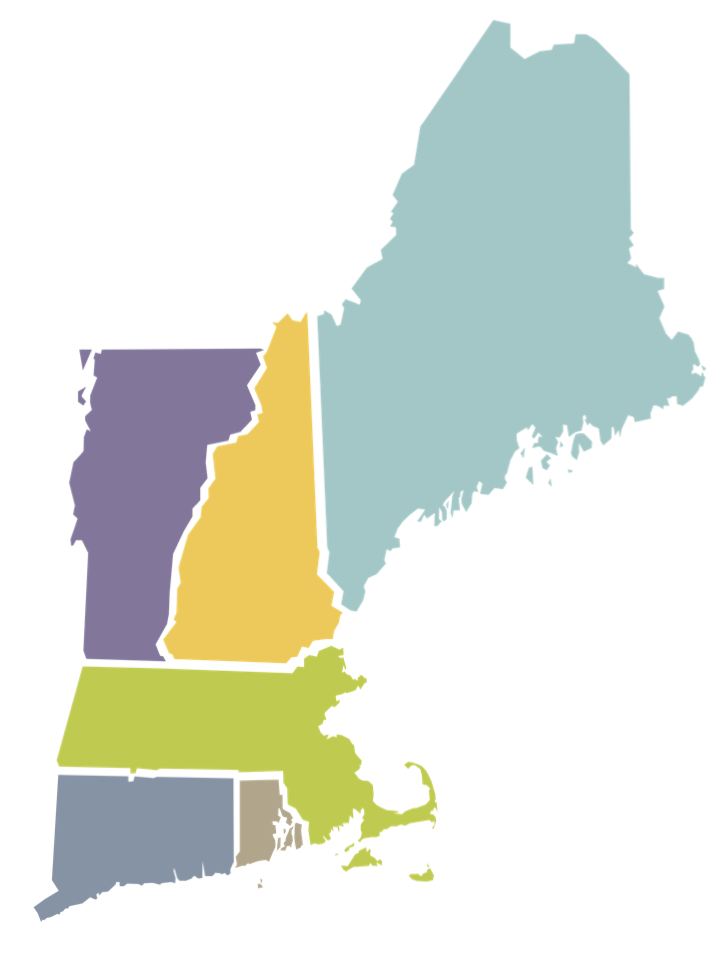
Note: A detailed list of active programs, initiatives, partnerships, and organizations with an explicit focus on increasing educator diversity identified through the regional landscape snapshot process is included in Appendix B.
QUESTION 3
Who administers, leads, or partners in this work?
Across the region, nonprofit organizations, districts and K-12 schools, educator preparation programs, and state education agencies are leading the majority of the work underway. In many cases, the work is led or administered by two or more partner entities working in collaboration—for example, a district working with a higher education educator preparation program. The chart below shows the percentage of current programs and initiatives being administered or led by various entities.
Note: Many programs, initiatives, partnerships, and organizations in the region have multiple groups working together (e.g., district and nonprofit organization) to lead the work, and therefore percentages do not sum to 100%.
QUESTION 4
Which group(s) are the intended beneficiaries for these programs, partnerships, initiatives, or organizations?
Current school or district employees, including paraprofessionals and ed techs, are the most common beneficiaries of DEW-related work; this is reflective of a broader interest regionally in grow-your-own programs focused on cultivating a workforce from within a community. Given that nearly half of programs, partnerships, initiatives, and organizations in New England are focused on supporting, retaining, and promoting racially, ethnically, and linguistically diverse educators, current teachers and administrators are also a commonly targeted population for this work.
Note: Many programs, initiatives, partnerships, and organizations in the region have more than one population served, and therefore percentages do not sum to 100%.
QUESTION 5
What types of strategies and activities are most commonly being used to diversify the educator workforce in the region?
The strategies and activities currently in place vary widely across programs, organizations, districts, states, and the DEW framework focus areas; however, a number of recurring strategies can be seen across the region.
Of the programs, partnerships, initiatives, and organizations identified:
- 23% provide scholarships or other financial support to cover the cost of tuition for licensure coursework or offer stipends during student teaching experiences
- 21% have established communities of practice, supportive networks, or other networking opportunities for current and potential educators
- 16% offer professional development opportunities to current and aspiring educators of color
- 15% leverage partnerships with institutions of higher education
- 11% include paraprofessional pathways programs or grow-your-own programs
- 10% include mentoring or coaching supports for current or potential educators of color
- 10% provide educators with leadership development and coaching opportunities
- 10% include affinity group spaces for racially, ethnically, and linguistically diverse educators to connect with and support each other
- 9% include advocacy work focused on creating the conditions to attract, retain, and promote a more diverse educator workforce
- 9% include opportunities for prospective educators to get hands-on experience working in schools
- 9% include teacher residency programs, where teacher candidates are paid to work directly in schools under the supervision of an experienced educator as they complete credentialing requirements
- 7% offer academic support and advising to teacher candidates to help support program completion
Note: Programs, partnerships, initiatives, and organizations frequently use more than one strategy to work toward diversifying the educator workforce, and therefore percentages do not sum to 100%. A detailed table with frequency counts for the strategies and activities in place across the five areas of the DEW framework is included in Appendix C.
QUESTION 6
What areas tend to be addressed by policies with potential influence on DEW?
A review of relevant statutes, rules, and regulations for each of the six New England states revealed a variety of policies currently in place to deliberately increase the diversity of the educator workforce. Generally speaking, policies with potential influence on diversifying the educator workforce tend to address the following areas:
- Collecting and reporting local district data regarding the demographics of staff members
- Collecting and reporting data regarding the demographics of educator preparation program candidates and faculty
- Establishing state goals for diversifying the educator workforce
- Establishing statewide programs and councils explicitly intended to diversify the educator workforce
- Establishing requirements, supports, and alternatives to licensing
QUESTION 7
How many states have at least one policy that explicitly addresses an area of the DEW framework?
Policies across states were categorized into the five DEW Framework areas. While five of the six New England states have enacted at least one policy intended to streamline the certification process, only two states have policies currently in place relevant to supporting, retaining, and promoting diverse educators.
Number of states with at least one policy:
State-by-state breakdown:
| STATE | Cultivating | SUPPORTING | STREAMLINING | RECRUITING | SUPPORTING |
|---|---|---|---|---|---|
| Connecticut | Yes | Yes | Yes | Yes | Yes |
| Massachusetts | Yes | Yes | Yes | Yes | Yes |
| Maine | No | Yes | Yes | No | No |
| New Hampshire | No | No | No | No | No |
| Rhode Island | No | No | Yes | Yes | No |
| Vermont | Yes | No | Yes | Yes | No |
Note: A detailed list of policies by state is included in Appendix D.
Interested In Learning More? Let's Talk.
Personalized, equitable, and student-centered education is too important to put aside. Together, we can improve learning for all your students.
Contact Us