
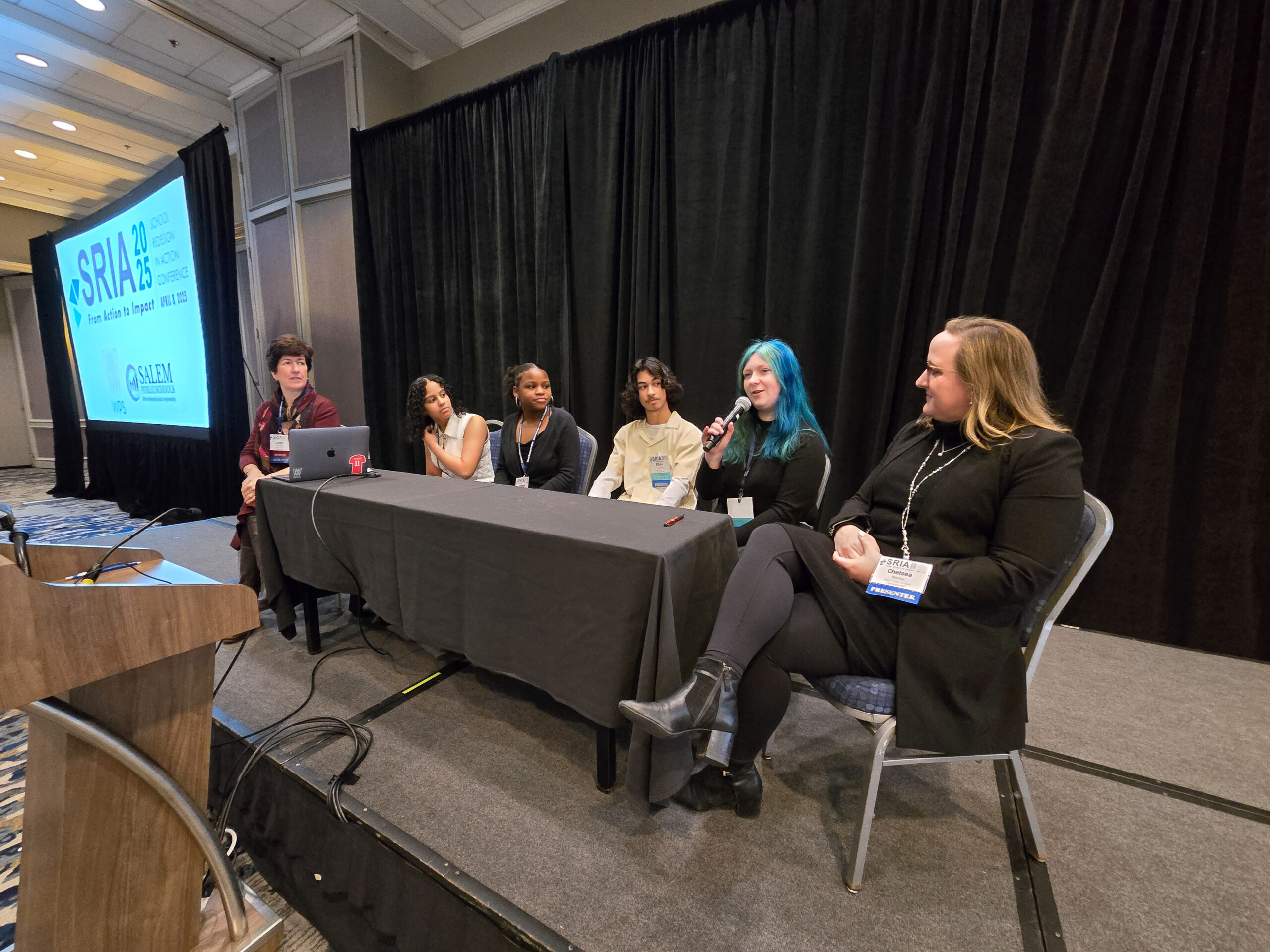
The Great School Partnership’s School Redesign in Action (SRIA) 2025 was held on April 8th at the Boston Marriott in Newton, Massachusetts, bringing educators from across New England together to connect around their shared vision of educational excellence.
This year’s theme was “From Action to Impact.” As GSP Executive Director Paulina Murton noted in her opening address, the day was “designed to foster collaboration between educators, to share new strategies to support student learning, to collectively examine research, to listen closely to student voices and to leave with a plan that centers equity and ensures our actions as educators have impact on all students.”
Couldn’t make the event? This blog provides educators with tools and tips to take action and make a positive impact in their schools.
SRIA Keynote Speakers
SRIA 2025 opened with Brad Lopes of the Aquinnah Wampanoag tribe addressing the crucial need for contemporary Indigenous representation: “There is a habit of speaking about Indigenous life in the past, but we are still here.”

the Massachusetts Department of Elementary and Secondary Education (DESE) gave an invigorating opening keynote.
Department of Elementary and Secondary Education (DESE) Deputy Commissioner Dr. Regina Robinson followed, emphasizing the importance of relationships and a sense of belonging for all students: “The work that we do in education, it’s literally allowing kids to feel seen, heard, and have a sense of belonging.”
Actionable Steps You Can Take:
- Acknowledge indigenous people not just in the past, but also their rich present existence. Try this resource shared by Lopes!
- Work to ensure that relationships and belonging are centered in students’ experiences in schools.
Teaching and Learning
After the morning keynotes, educators began their day of learning, exploring sessions on grading, proficiency-based learning, curricular coherence, and multi-tiered systems of support (MTSS). In the “Beyond the Grade” workshop, participants engaged in a collaborative math task and a scoring calibration exercise aimed at planning for differentiated instruction. GSP Senior Associate Christina Balkaran emphasized, “By thinking together and learning from student work, we uncover the next steps that empower every student to grow.” One inspired attendee remarked, “I am eager to implement these ideas and practices into my teaching, my grade level, and my school.”
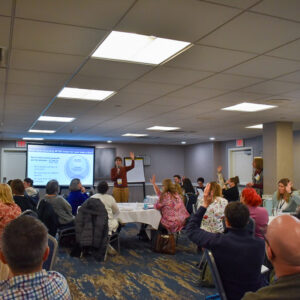
During the “Leading Literacy Curriculum Change” session, participants reflected on tools they might use to evaluate existing literacy resources through an equity lens and identify gaps to guide curriculum decisions. GSP Senior Associate Scarlett Tannetta showcased Mansfield, CT Public School’s success story, noting, “Literacy is the backbone of education; being able to read and make meaning of the text is a key to unlocking limitless opportunities.” Educators left with a roadmap for addressing challenges related to changing literacy instruction.
Another popular workshop, “Equitable Multi-Tiered Systems of Support”, was designed around GSP’s newly released Multi-Tiered Systems of Support toolkit. Participants examined a set of guiding beliefs and a pulse check that schools and districts can use to gauge their current systems of support. GSP Senior Associate Gabiriela Stiteler emphasized, “All means all and each means each. We have to think about how we design schedules and do not remove students from their core instruction. But we also have to think about how we support educators in universal design and integrating research-based interventions.”
Actionable Steps:
- Check out GSP’s Proficiency-Based Learning Roadmap and Elements of Effective Instruction toolkit for classroom implementation.
- Explore Multi-Tiered Systems of Support with our new MTSS toolkit.
Diversifying the Educator Workforce
An exciting feature of SRIA2025 was the “Diversifying the Educator Workforce” panel, an in-person extension of GSP’s “More Than a Seat at the Table” podcast, which explores how districts across New England are working to diversify their educator workforces. Facilitating the panel were two of the podcast’s hosts, Danielle Pierre and Darthula Mathews. “From participant to presenter—what a journey it’s been,” said Matthews of her SRIA journey. “I am grateful to connect with passionate educators committed to growth and equity for all students.”
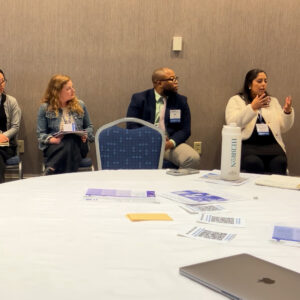
Student panelist and Youth Program Specialist at the Vermont-based organization UP for Learning, Ana Lindert-Boyes, shared: “I never had a teacher of color during my pre-K through college experience.” She now believes that representation should be a “given.”
During the Q&A section of the panel, Massachusetts Diverse and Culturally Responsive Manager Eric Washington responded to an attendee’s question about how DESE is adapting equity approaches in today’s uncertain climate. His response became one of the conference’s most quoted insights: “We can build tunnels or bridges. Either way, the work has to be done.”
Actionable Steps:
- Listen to GSP’s More Than a Seat at the Table podcast to learn what organizations across New England are doing to diversify the educator workforce.
- Access our DEW Collaborative page for research and resources.
Student Voices
Monument Mountain students led restorative circles with participants, demonstrating how these practices can be used beyond repairing harm, as a tool for building community and belonging.
“Restorative justice in education is not just a strategy to call on during a crisis,” explained GSP Senior Associate Erica Wallstrom. “It is a shift in our fundamental frameworks and mindsets. When educators prioritize opportunities to build relationships and sense of belonging with their students and families, schools become connected communities that foster open dialog, self-reflection, personal growth, and shared humanity.”
Later, attendees had another opportunity to hear from students directly. At lunch, students from Salem Public Schools shared experiences from their Reimagining Middle School initiative, a school redesign partnership with conference sponsor WPS Institute. This initiative transformed traditional classroom learning into an experience-based model, featuring team projects, learning expeditions, and student-driven activities that foster authentic preparation for the future.
One student reflected, “My teachers take the time to get to know me. They trust me, and I trust them.” While another eighth-grader admitted, “I always thought school was boring. But when I got introduced to the pilot program in seventh and now eighth grade, it’s given me more opportunities to do other stuff. We’re able to learn at our own pace, and our learning now is a lot more flexible.”
Actionable Steps:
- Incorporate restorative practices using GSP’s toolkit.
After SRIA
While this blog has highlighted some of the innovative approaches and resources shared at SRIA 2025, nothing compares to personalized guidance tailored to your school’s unique needs.
Ready to transform your approach to student success? Book a complimentary call with our team of experienced education experts to see how GSP can help you implement these big ideas at your school.
Together, we can move from action to impact in your school community!